open access - Page number 2

Collaboration is hard work: Planning for today's teams

How do you collaborate with today's marketing teams?

In our experience, every marketing team is different--but increasingly they have a few things in common. For a start, it's rare to find the whole team in any single place on any given day. More often, we find teams distributed across cities, countries, and fairly frequently, continents. The members of a team have also changed: full time employees are usually in the minority among a collection of contractors, freelancers, and agencies who are treated as an integrated part of the team, rather than a simple supplier. » Read more

4 Comments

Yale offers open access to millions of resources

Yale University is planning to become the first Ivy League school to offer an open access commons to millions of digital images from its archives, all free of licenses for transmission or use. » Read more

0 Comments

Net neutrality in the 15th century

Tim Wu, author of The Master Switch: The Rise and Fall of Information Empires, in his SXSW talk offered the idea that while we think of net neutrality as a new problem, it is actually a very old problem that we've dealt with many times before.

While sharing and collaboration are the oldest of ideas, much of the modern innovation and successes that have resulted from them have depended on the wide availability of an open Internet. And the basis for that was set in place 400 years ago. » Read more

0 Comments

Mashing up library data with open source

When I was approached nearly five years ago now and asked to put together an edited work on how libraries can use mashups to improve services, I have to admit that I was a bit disappointed that the topic wasn't going to be open source software instead. Before the ink had even dried on my mashups book though I was offered the opportunity I wanted, a book on open source software for libraries. Now when I'm asked to speak at conferences and events the topic of interest is either open source or mashups, but never both. While there are of course differences in these two types of technologies, there are also similarities. » Read more

2 Comments

How open access to research benefits us all

Nearly a decade after the launch of the open access Malaria Journal, the publication released a report about how open access has impacted the study of malaria. Launched in 2002 as the only scientific journal devoted exclusively to malaria research, Malaria Journal became a top ranked journal for tropical medicine within just a few years.1 » Read more

2 Comments

Open access overview: Focusing on open access to peer-reviewed research articles and their preprints

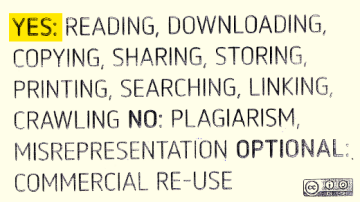
This is an introduction to open access (OA) for those who are new to the concept. It doesn't cover every nuance or answer every objection, but it should cover enough territory to prevent the misunderstandings that delayed progress in our early days. » Read more

0 Comments

Diversifying Saudi Arabia through open source and its university-by-design

Last week I attended the EPIC conference in New York City. One of the more interesting topics came by way of Saudi Arabia. If you haven’t heard of King Abdullah University of Science and Technology, or KAUST, you’re missing out on one of the grander experiments at the intersection of government, culture, economic development, and academia.   » Read more

0 Comments

Uncovering open access

To the general public, “doing science” is all about discovery. But in truth, that’s only half the picture. Consider the experience of an obscure nineteenth-century Augustinian monk...

From 1856 to 1863, Gregor Mendel cultivated and observed 29,000 pea plants and managed to unlock some of the secrets of heredity, including the concepts of dominant and recessive traits. » Read more

3 Comments

Paolo Mangiafico, on Open Access at Duke University

We spoke recently with Paolo Mangiafico, the Director of Digital Information Strategy in the Office of the Provost at Duke University, about Duke's open access initiatives.

Recently, Duke announced that it would join MIT, Harvard and Stanford in adopting an open access policy, in which the scholarly articles written by faculty members are made freely available to the public for non-commercial use, by default. What was the rationale for Duke's decision? » Read more

3 Comments

Law.Gov -- opening up primary legal materials

In the technical world, we long ago came to understand, thanks to Larry Lessig, that code is law. The way we build our systems and protocols defines how the Internet and our operating systems work. If we turn to the real world, we see that the reverse holds and that law is code. The way we structure our legal system defines how we as a society operate. » Read more

0 Comments