open standards - Page number 3

Document Freedom Day: UK releases Government ICT Strategy in .odt

Wow! What a great Document Freedom Day!

Today, the United Kingdom's CabinetOffice released is official Government ICT Strategy – not only in .pdf and .doc, but also in .odt!

It's a more detailed, rigorous follow-on to their earlier announcements on this important topic, and well worth a read by governments around the world. » Read more

1 Comment

Celebrate Document Freedom Day!

Today marks the annual observance of Document Freedom Day (DFD), a global day for document liberation.

On this important occasion, let's all recognize that progress has been made to promote and use open standards and to liberate documents. In January, India’s Department of Information Technology published its draft Interoperability Framework for E-Governance in India (IFEG), which lists ODF on its approved standards for e-governance in India. » Read more

0 Comments

Cost savings in The Netherlands: Now you see it, now you don't

The Open Source Observatory flashed an eye-popping headline last week: “Moving to open source would save [The Netherlands] government one to four billion [euro].”

I had hoped I could do the dirty work of going over the report in fine detail and give you the summary, but there are two problems: first, it’s only in Dutch (I guess the actual problem is I can’t read Dutch), and second, the government took it down.
» Read more

6 Comments

Freedom to Read, Freedom to Write: Celebrating Document Freedom Day 2011

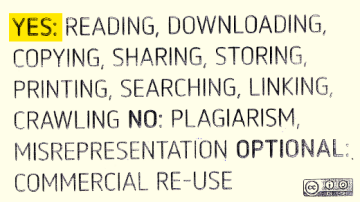
Free Software Foundation Europe (FSFE) invites individuals, community groups and institutions to celebrate the Document Freedom Day (DFD) on March 30th. DFD is a global day to celebrate Open Standards and open document formats and its importance. Open Standards ensure the freedom to access your data, and the freedom to build Free Software to write and read data in specific formats.
» Read more

0 Comments

Open standards and the royalty problem

In December, the long awaited version 2.0 of the European Interoperability Framework (EIF) was released by the European Commission. Version 1.0 had defined “open standard” as royalty-free, a definition of enormous impact on standards policy because it focused on the user perspective rather than the perspective of standards development organizations. Some standards organizations claim that “open standards” refers only to the way the standard was developed – not the terms of availability. » Read more

6 Comments

Open*Government: 2010 in Review

So much took place in the realm of open source public policy this year, that there was plenty to write about.  Some of the government channel's first posts were about the U.S. Department of Defense's clarifications on the procurement of open source software, Forge.mil's project to bring together software developers and military leaders to create and share software, and the IIPA's recommendation that the U.S. blacklist certain countries that use open source.

But opensource.com and the government channel isn't just about software being used by governments.  It's about » Read more

0 Comments

An open plea to video content providers

Netflix, Hulu, Blockbuster VOD, Vudu, and a slew of other video streaming services have been popping up left and right. Yet there's a big problem with most of these services: many of them suffer from the same mentality that the recording industry had in 1999--they are resisting the demands of their customers. » Read more

7 Comments

Seeking open infrastructure: Contrasting open standards, open source, and open innovation

While “open” normally has connotations of public goods, the idea of “open”–ness has been used for decades as a competitive strategy by firms in the computers and communications industries. Phrases like “open standard,” “open source” and more recently “open innovation” have been used to refer to these strategies.

What do they have in common? Which ones really are “open”? What does “open” mean, anyway? » Read more

0 Comments

European Interoperability Framework supports openness

Recognizing the role of open source and open standards in innovation, the European Commission released yesterday its long-awaited “European Interoperability Framework.” This official policy (the “EIF”) » Read more

1 Comment

The role of open source in emerging economies: A Malaysian success story

2010 has been a fantastic year for open source. The progress that Malaysia has made with open source has caught the attention of governments of developed and emerging economies. I would like to share some of the opportunities, challenges, and future benefits that open source can continue to offer to economies such as Malaysia. » Read more

3 Comments